
The app this map came from
Weather Navigation carries the same radar and road-surface data on Apple CarPlay and Android Auto, with a weather-aware route planner and storm-cell tracking, over the United States and southern Canada.




Scan to install Weather Navigation
Saskatchewan highway conditions and winter driving
Radar and live pavement conditions on the 2 main highways of Saskatchewan — plus the winter tire rule, the freezing level and where the province itself publishes closures.
Updated Sep 20, 2026 5:33 AM CST · Mostly dry, wet in places
Lowest 6°C near Swift Current · Highest wind 19 km/h near Regina
Use Weather Navigation for your next road trip
Saskatchewan has no winter tire law — SGI has said one is not being considered — and the winter it asks drivers to manage is the prairie kind: not deep snow but snow that never melts and a wind that moves it, so that Highway 1 between Regina and Moose Jaw closes for zero visibility under a clear sky. This page follows the Trans-Canada across the province and the Louis Riel Trail from Regina to Saskatoon and Prince Albert, with the surface condition estimated along each from radar and analysis, the temperature and the wind, beside what the Highway Hotline itself declares in its own defined terms.
Weather data from Sep 20, 2026 5:33 AM CST
The corridors this page follows, each with its own page. Surface and temperature are the latest readings along the whole road; the summits are where the same road is a different drive.
| Highway | Runs | Surface now | Lowest temp. | Highest wind |
|---|---|---|---|---|
| Highway 1 (Trans-Canada) | Alberta border – Manitoba border | Mostly dry, wet in places | 6°C | 20 km/h |
| Highway 11 (Louis Riel Trail) | Regina – Prince Albert | Mostly dry, damp in places | 6°C | 20 km/h |
Closures and road work are not yet imported for Saskatchewan; Highway Hotline carries them. No weather warnings from Environment and Climate Change Canada are in force as of Sep 20, 2026 5:33 AM CST.
Saskatchewan has no winter tire law and no rule about studded tires: the Vehicle Equipment Regulations set tread depth and inflation and say nothing about the season, and SGI has said a winter tire law is not being considered. What the province does is define the words: on the Highway Hotline "travel not recommended" means visibility under 250 metres or a road that could become impassable, and it is the closest thing to a rule a prairie winter has.
No Saskatchewan law requires winter tires on a passenger vehicle, and none restricts studded tires: The Vehicle Equipment Regulations, 1987 require tires with adequate tread, properly inflated and free of damage, and that is the whole of the tire law. SGI and CAA Saskatchewan recommend winter tires; about half the province's drivers use them. You are required to drive to the conditions.
Studded tires are legal in Saskatchewan all year: the regulations carry no provision on them. Manitoba, next door, allows them only from 1 October to 30 April, and most US states to the south restrict them by season, so a driver leaving the province on studs should check the rule at the line.
There is no seasonal switch here. What changes is the wind, and Highway Hotline ↗ is the province's own account of what it has done to the road before you set off.
Source: The Vehicle Equipment Regulations, 1987 (Saskatchewan), checked September 9, 2026.
What the road normally throws at you, month by month, from Environment and Climate Change Canada's 1981–2010 normals at Regina International Airport, Saskatoon Diefenbaker International Airport, Swift Current and Prince Albert Airport — four stations, four climates, and each month names the worst of them and the place that measured it. This is what the month is usually like, not a forecast and not a rule.
Source: Environment and Climate Change Canada, Canadian Climate Normals 1981–2010, through the MSC GeoMet API. Snowfall is the monthly total; nights below freezing are days whose minimum was at or under 0 °C.
The Highway Hotline is the road conditions service run by the Saskatchewan Ministry of Highways, at hotline.gov.sk.ca. It is the province's own account of its highways, in its own vocabulary, and it publishes:
The Hotline reports what the ministry's crews have seen and declared for each section — covered, drifting snow, travel not recommended — and "travel not recommended" is its own defined term: visibility under 250 m or a road that could become impassable. What this page adds is the layer under those declarations — the surface condition estimated along the whole road from radar and analysis, and the wind, which on the prairie is the number that says whether the snow already down is about to move.
The same live radar and road-surface data as this map, on your phone and on Apple CarPlay or Android Auto.
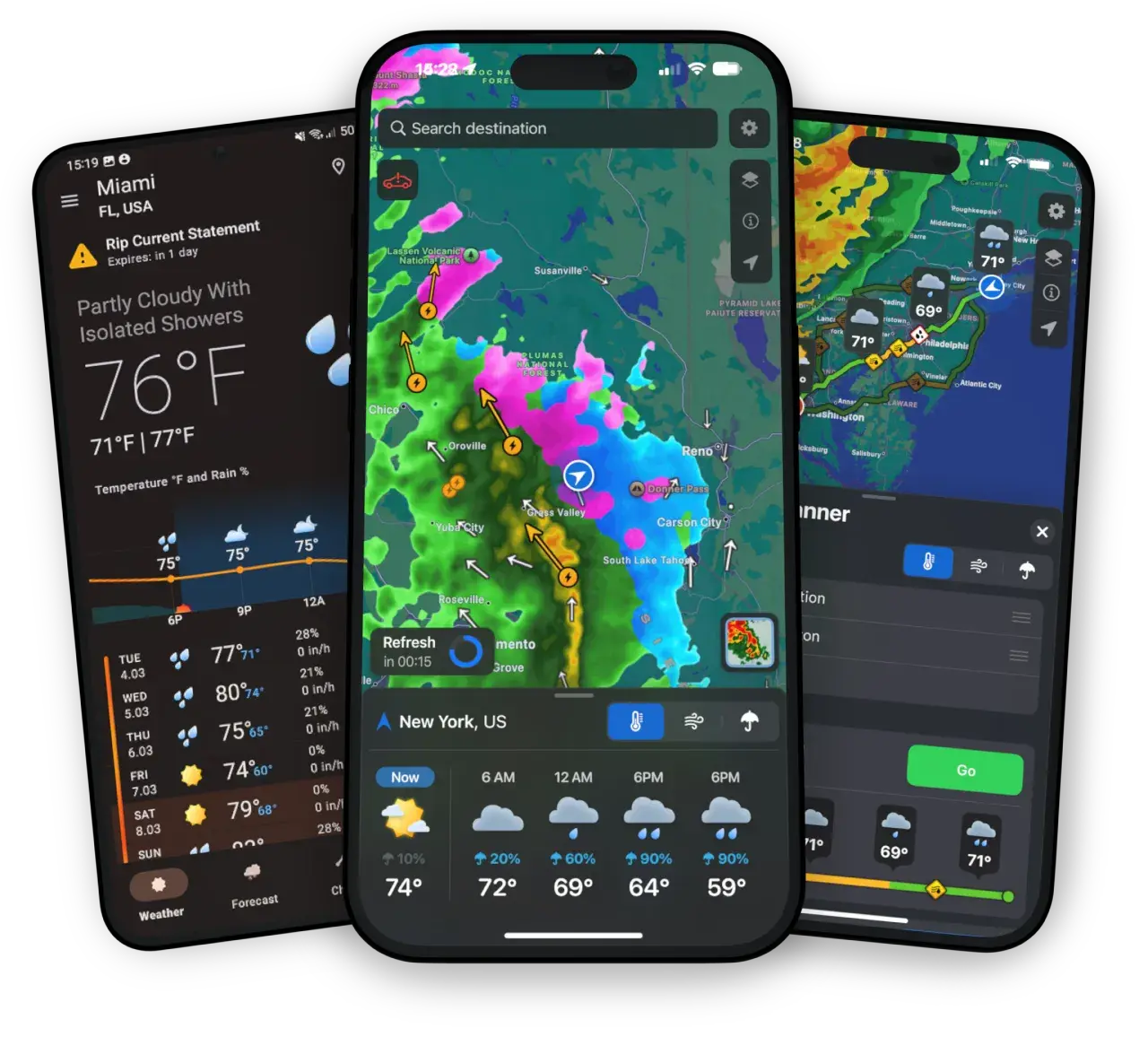
Weather Navigation carries the same radar and road-surface data on Apple CarPlay and Android Auto, with a weather-aware route planner and storm-cell tracking, over the United States and southern Canada.